
BLOG
Hairline micropigmentation: recreating a natural hairline
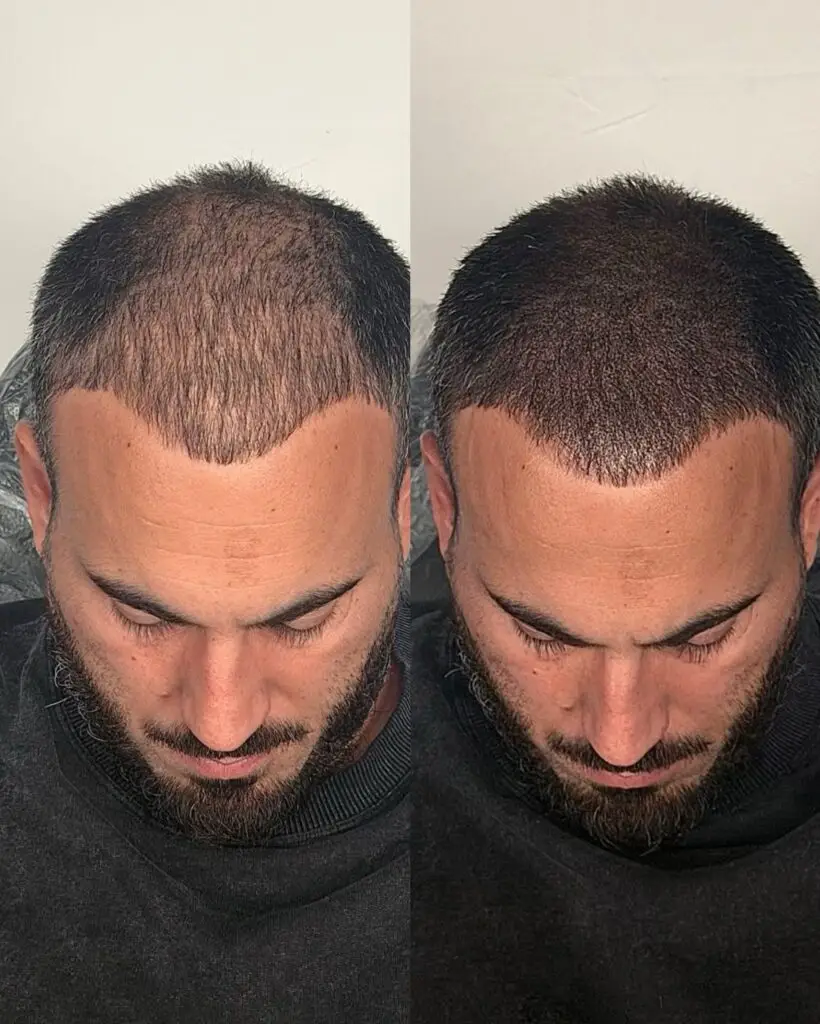
The hairline is the first thing people notice about a haircut, and often the first part to recede. When it moves back or the temples deepen, the face looks different, even if the rest of the scalp is still covered.
Scalp micropigmentation can redraw a hairline without surgery. But it has to be right: this is where a poor design shows the most. Here is how we approach it.
What hairline micropigmentation can do
Scalp micropigmentation, also called tricopigmentation, places very small dots of pigment that mimic the look of closely cropped hair. On the hairline, it can:
Redraw a receding hairline, giving the face its frame back.
Soften receding temples, which make hair loss more noticeable.
Even out an irregular line, for example after a hair transplant or with uneven hair loss.
It does not make hair grow back: it changes how the scalp is perceived. The look is that of a shaved head or very short hair. If you keep your hair longer, we will tell you honestly whether SMP suits your case.
What makes a hairline look natural
A successful hairline goes unnoticed: people see a face, not a drawing. Several things matter.
Suited to your face and age
There is no one-size-fits-all hairline. It depends on the shape of your face, forehead and temples, and on your age. A line that is too low or too straight can look artificial, especially over the years.
A soft edge rather than a hard line
A natural hairline is not a sharp line: it softens gradually towards the forehead. This gradient is what makes it convincing up close and from a distance.
The right shade
The shade is chosen to match your skin and hair. A line that is too dark draws the eye; the right shade blends into the whole.
Continuity with the rest of the scalp
The hairline has to match the temples and the rest of the scalp. Depending on your situation, we work with a shaved effect or a density effect: our article on shaved effect or density explains the difference.
How the hairline is drawn at ONESCALP
The complete treatment takes one day, from 9 am to 6 pm, and the day starts with your hairline.
In the morning, we draw the line with you. We sketch it, you look at it in the mirror, we adjust it. We take the time to discuss it: it is your face, and pigmentation only begins once you have approved the line.
Then comes the pigmentation. Area by area, with breaks, including time to eat. In the evening you head home, and you can drive.
Around a month later, a touch-up if needed. Once the skin has healed, the line or shade can be adjusted. Find out more: how many sessions you need.
Hairlines and other situations
The hairline is often treated together with the rest of the scalp: temples, top, crown. SMP can also help people who have had a hair transplant and want a more even result.
If your hairline has already been pigmented elsewhere and you are not happy with it, ONESCALP also corrects SMP done elsewhere. Send us a photo first: we will tell you whether laser is needed or whether we can work over it.
How long does a pigmented hairline last?
At ONESCALP, results last 3 to 5 years, after which the colour needs refreshing. Without maintenance, it fades completely after 6 to 7 years. Full details in our article on how long SMP lasts.
See results and get a quote
The best way to judge is to see real hairlines. Browse our unedited before and after results.
For a quote, send three photos of your scalp (front, top, back) on WhatsApp and take advantage of our free consultation. Our cost page gives you a first idea. Clients travel to us from across Europe: we welcome you in our studios in Geneva and Paris.
Frequently asked questions
Can scalp micropigmentation recreate a hairline?
Yes. It redraws a receding hairline and can soften receding temples, with the look of closely cropped hair. It does not make hair grow back.
Who decides the shape of the hairline?
We draw it with you on the morning of the treatment. Pigmentation only begins once you have approved the line.
Can the hairline be adjusted afterwards?
Yes. Around a month later, a touch-up is possible if needed, once the skin has healed.
All articlesYour line. Your face. Your result.
Let’s talk about your project in a free consultation.